not a biography
How I See.
This is not a page about where I've worked. It is a page about one question I have been circling for twenty years:
Why do I notice what I notice?
What follows are five chapters — the honest, edited version of how I learned to pay attention, and how that attention became a body of work.

I learned to pay attention.
Before I learned to read a spreadsheet, I learned to read a room.

I grew up between two educations. One was formal — school, degrees, the quiet ambition of a first-generation household that made room for me to think out loud. The other was slower, and older, and mostly wordless.
It happened at my grandmother's kitchen table. She would set down a cup of coffee and ask a small question, and then she would wait. She was teaching me — though I did not know it at the time — that noticing was a form of respect. That the space between a question and an answer was where the truth usually lived.
By the time I sat in my first boardroom, twenty years later, I already had the muscle. I did not know I would spend a career deciding what to do with it.
A short timeline of learning to pay attention
1985
Sundays at my grandmother's table. Two coffee cups. One small question at a time.
1998
My first job in enterprise. I take more notes than anyone else in the room.
2012
A colleague tells me, kindly, that I 'notice too much.' I begin to disagree.
2024
The noticing finally has a name — a method a stranger can hold.
Noticing, I learned first, is a form of respect. It is what you do before you know what to say.
— from Chapter I
The people we overlook.
Every room I've ever been in has had one — the quietest person, holding the truest thing.
Twenty years of enterprise strategy taught me a thing that does not appear on any org chart: the person the room is trained to look past is almost always the person the room cannot afford to lose.
The junior analyst at the far end of the table. The operations lead nobody thought to invite. The woman who said the exact right thing in the hallway, five minutes after the meeting ended, because the meeting had not made a place for it.
I began to make a practice of listening for them on purpose. Not out of charity — out of self-interest. They were often the ones who could see the thing that had been trying to cost us for eighteen months.
Somewhere along the way, that practice stopped being a private habit and became the shape of the work. It is the whole reason Asset Builder™ exists — a method that helps the overlooked recognize what they have been carrying, and helps the rooms around them stop looking past it.

The person the room is trained to look past is almost always the person the room cannot afford to lose.
— from Chapter II

Systems should help people flourish.
A good system is a form of care. A bad one is a slow tax on the person inside it.
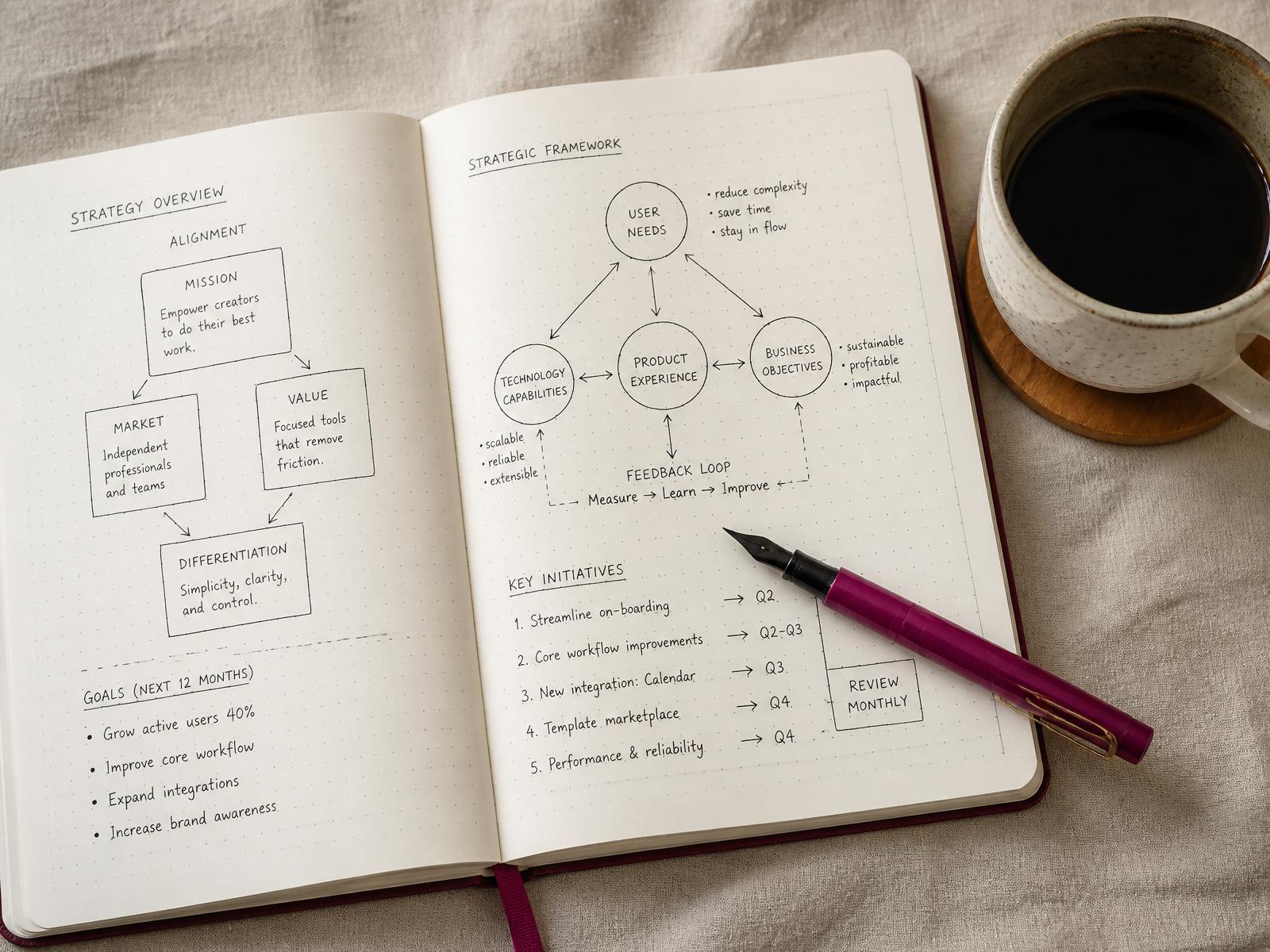
I think about systems the way my grandmother thought about gardens. You do not force them; you tend them. You notice what wants to grow, and you make room for it. You retire what has finished its season, and you do not apologize for the space it leaves.
Most of the systems I've inherited in my career were not designed with that patience. They were designed for compliance, or for scale, or for the comfort of the people who had already arrived. They quietly cost the people they were meant to hold.
My working conviction is simple: a system's true measure is who it makes more possible. If it flattens the people inside it — their attention, their voice, their nights and Sundays — it is not a good system, no matter how efficient it looks on a chart.
Everything I make now is a small, patient argument against the systems that flatten people. That is the whole thesis. The rest is craft.
A system's true measure is who it makes more possible.
— from Chapter III
Why I built Pretty.Tech
and Rise & Reign.
Two objects. Same conviction. Different weight.
For years I believed that focus meant choosing one calling over another. I assumed that building multiple meaningful things meant I lacked discipline. Over time I realized I wasn't distracted. I was trying to compress how I was uniquely designed into someone else's definition of focus.
I do my best work when I can move between different kinds of problems — technology, leadership, hospitality, career growth, systems, people, community. Pretty.Tech and Rise & Reign Mobile Cafe are not unrelated businesses. They are two different ways I serve people. One improves the systems people work within. The other creates spaces where people can slow down, connect, and rest.
I believe these long-held visions were entrusted to me — and that pursuing them faithfully is one way I honor the God who gave them, along with the life, opportunities, and mind that came with them. That belief is quiet, but it is the ground everything else stands on. You do not have to share it to be welcome here. You only have to be building something worth tending.

Software should notice the person on the other side.
A studio for building tools that make people more capable — not more compliant. Pretty.Tech is the working answer to the third chapter, expressed in code.
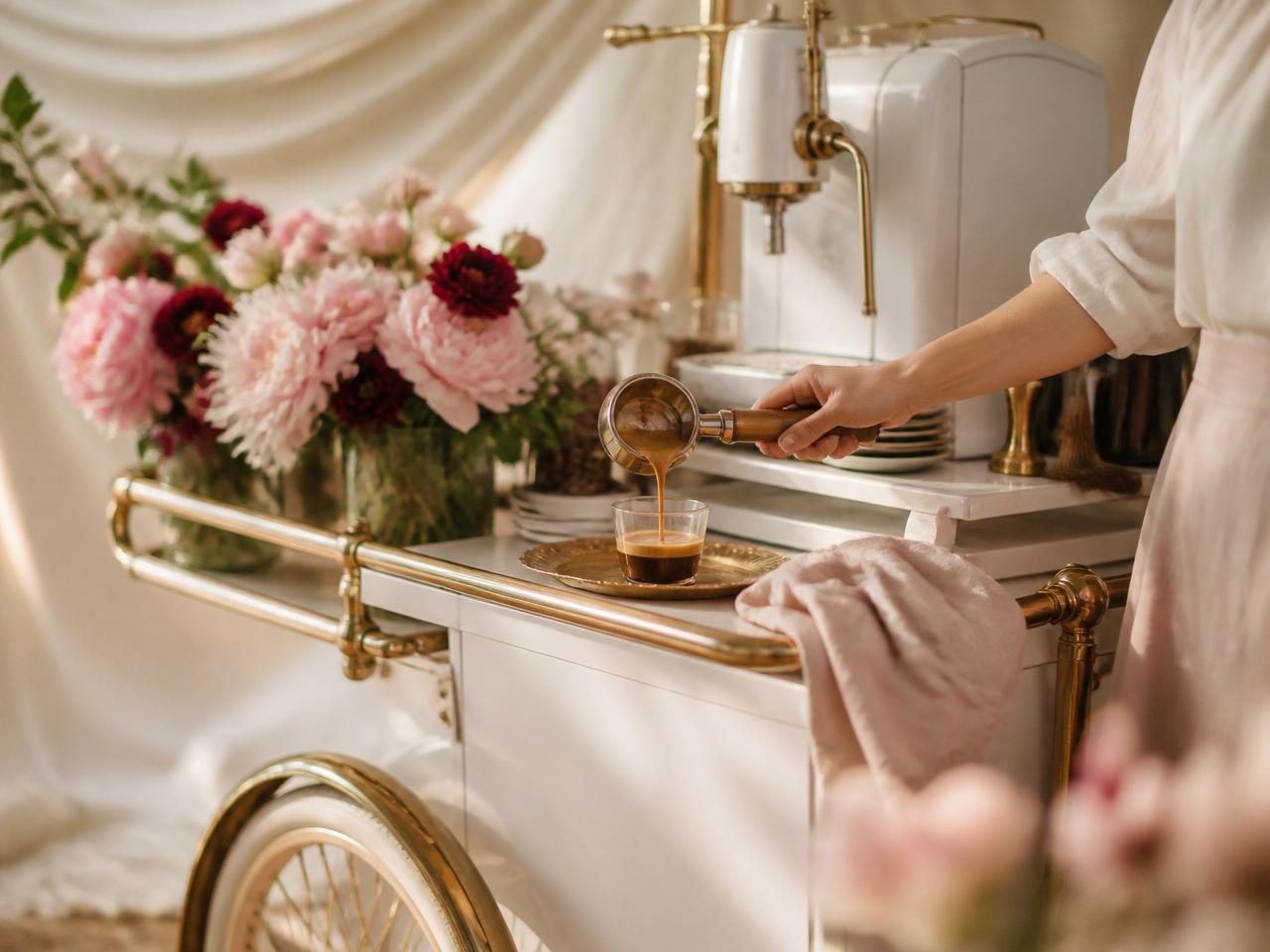
Hospitality is a way of noticing people on purpose.
A small coffee cart and a series of quiet gatherings, made for the fifteen minutes most calendars ignore. The same conviction, poured slowly.
Two objects. Same conviction. Different weight.
— from Chapter IV
What I hope people experience here.
Not a brochure. A room. And a chair with your name on it, if you want one.
My hope for this site is small and specific. I want you to arrive tired — from the week, from the noise, from the rooms that flatten you — and leave with the sense that someone was paying attention.
I want the essays in Patterns to land like a friend leaning across the table. I want the Asset Builder™ Assessment to feel like the honest quiet of a Sunday afternoon. I want the advisory pages to feel less like sales and more like a slow invitation to sit down.
If you leave this site with three sentences of your own you had not yet said out loud, I have done my job. If you leave wanting a longer conversation, I've made one available.
That is the invitation. It is the same one my grandmother extended, thirty years ago, over a cup of coffee I was too young to appreciate at the time.

Leave with three sentences you had not yet said out loud. That is the whole point.
— from Chapter V
An invitation · closing the chapter
If any of this rang true,
let's sit down.
Most of what I do begins with a slow conversation. Not a pitch, not a scoping call — a conversation, over a notebook, about what you are actually carrying and what it would take to give it a shape.
If you have read this far, that is usually a sign the conversation is worth having.
A short list of ways to work together — weekly, monthly, quarterly, or once, deeply.
- · A standing hour, most Mondays
- · A longer monthly conversation
- · A quarterly working day — four times a year
- · One deep engagement per season
— S.
— Shána